· Riley Carter
Are Collapsible Water Bottles TSA Approved? Airport Rules Explained
"TSA approved" gets typed into search bars thousands of times a day, and the answer is simpler than the question. There is no approval sticker, no certified bottle, no list of permitted brands. There is one rule about liquids, published on tsa.gov, and once you read what it actually says, the whole airport question resolves in a sentence. Here is the rule, straight from the source, and where a collapsible bottle fits into it.
"TSA approved" is about what is inside, not the bottle
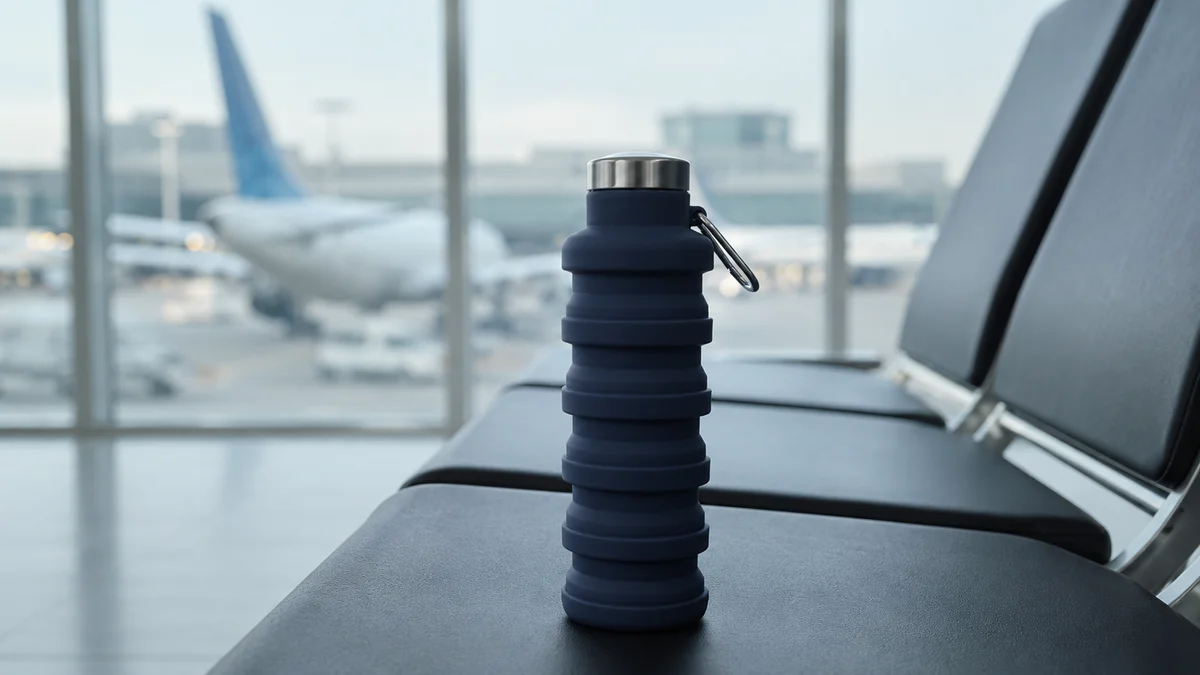
Start with what the agency itself publishes. TSA's What Can I Bring tool — the same database behind the myTSA app — has an entry titled "Empty Water Bottle," and the entry is two lines long: carry-on bags, yes; checked bags, yes. No size limit, no material restriction, no mention of whether the bottle is rigid steel, plastic, or folding silicone. An empty container is simply not the thing the checkpoint is looking for.
That is the entire "approval" question answered. A collapsible silicone bottle goes through airport security on exactly the same terms as any other bottle: freely, as long as nothing is in it. What makes the collapsible one different is not permission — it is what the bottle does with itself once it is empty, which we will get to below.
The liquids rule, as TSA actually writes it
The rule with the reputation is the 3-1-1 rule, published on tsa.gov as the "Liquids, Aerosols, and Gels Rule." As of this writing, the wording runs on two limits. You may bring a quart-sized bag of liquids, aerosols, gels, creams, and pastes through the checkpoint in your carry-on. Every container inside that bag must hold 3.4 ounces (100 milliliters) or less. Anything in a larger container belongs in checked baggage.
(100 mL) — the largest container of liquid TSA allows through the checkpoint, and everything must fit in one quart-sized bag per passenger
— TSA — Liquids, Aerosols, and Gels Rule, tsa.gov, 2026
Read that against a water bottle and the math is short. A full 17 oz bottle holds five times the checkpoint limit, so it cannot go through full — no bottle of that capacity can, whatever it is made of. The same page lists the exceptions, and they are narrow: medications, and food for infants and small children. It also notes that any liquid that alarms during screening gets additional screening, which is the polite version of "your bag is getting opened."
Notice what the rule never mentions: the container. Nothing on the page restricts bottle size, bottle shape, or bottle material. The limit is on liquid carried through the checkpoint. Empty the bottle and, as far as the rule is concerned, you are carrying an object, not a liquid.
Why full bottles get stopped at the X-ray
TSA's What Can I Bring entry for "Bottled Water" makes the contrast with the empty-bottle entry plain: in a carry-on, only 3.4 oz or less is allowed. So the traveler who reaches the conveyor with a full bottle is holding, in the rule's eyes, an oversized liquid — the same category as a full-size shampoo. The bottle is never the problem. The water is.
What happens next is routine and a little sad: the choice between stepping out of line to drink it, or leaving the bottle in the bin by the scanner. Either way you lose time, and in the second case a perfectly good bottle. All of it avoidable by tipping the water out sixty seconds earlier.
It is a big enough phenomenon that TSA's own officers published advice about it. In a 2023 press release listing things they never do when flying, the officers put it on record: they never bring a bottle of water to a checkpoint — they carry an empty bottle through and fill it on the secure side. When the people who run the X-ray tell you their own routine, that is the routine.
The checkpoint bin: what travelers give up most
A 2021 TSA press release states it in one line: the most common item travelers bring to a checkpoint that is not permitted through screening is a liquid, gel, or aerosol larger than the allowed limit. The releases that followed name the usual suspects — water, juice, coffee, soda arriving full at the scanner. That is the entire mystery of the "confiscated items" bin: it is mostly beverages, surrendered by people who did not know a rule this easy to comply with.
It also means the fix costs nothing. Nobody has to leave a bottle behind at a checkpoint. The rule stops water, and water pours out.
Empty and flat: where a collapsible bottle is built for this rule
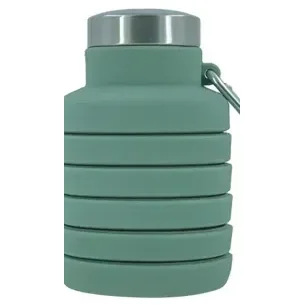
Here is the part the rule makes interesting. Every reusable bottle passes the checkpoint empty — but "empty" treats a rigid bottle and a collapsible one very differently. A rigid 17 oz bottle that has just been emptied is exactly as tall and exactly as bulky as it was full. It rides through the X-ray occupying a bottle-shaped block of your carry-on, and keeps occupying it at the gate, on the plane, and through the whole trip home.
A collapsible bottle stops being bottle-shaped the moment the water is gone. Press the food-grade silicone body down its ribs and a Squishly locks short at 4.5 in, down from 8.3 in at full height — a flat disc that slips into a jacket pocket or the front sleeve of a carry-on while you walk the security line.
the height a Squishly stands once collapsed, down from 8.3 in — the difference between a bottle-shaped block in the X-ray bin and a flat disc in a pocket
— Squishly product specs, 2026
So the sequence the rule forces on everyone — empty before screening, refill after — is the sequence a collapsible bottle happens to be designed around. The rule takes away the water; this design takes away the bulk that is left. Which measurements decide whether any bottle has a place in your bag is its own subject, and our guide to the best water bottle for travel covers it number by number.
The checkpoint routine, curb to gate
The rule turned into a routine takes four steps and adds zero minutes to your screening.
Before the line: finish your water or pour it out. Water fountains and restrooms sit before every checkpoint. This is the whole compliance step — done here, nothing else can go wrong.
At the belt: fold the empty bottle and leave it in your bag. An empty bottle needs no separate bin and no announcement; it goes through with everything else. The quart bag of toiletries comes out, the bottle stays put.
Past the scanner: expand the bottle and fill it. Refill stations and fountains sit on the secure side of most US airports, and this refill is the one TSA officers themselves recommend instead of paying gate prices for water.
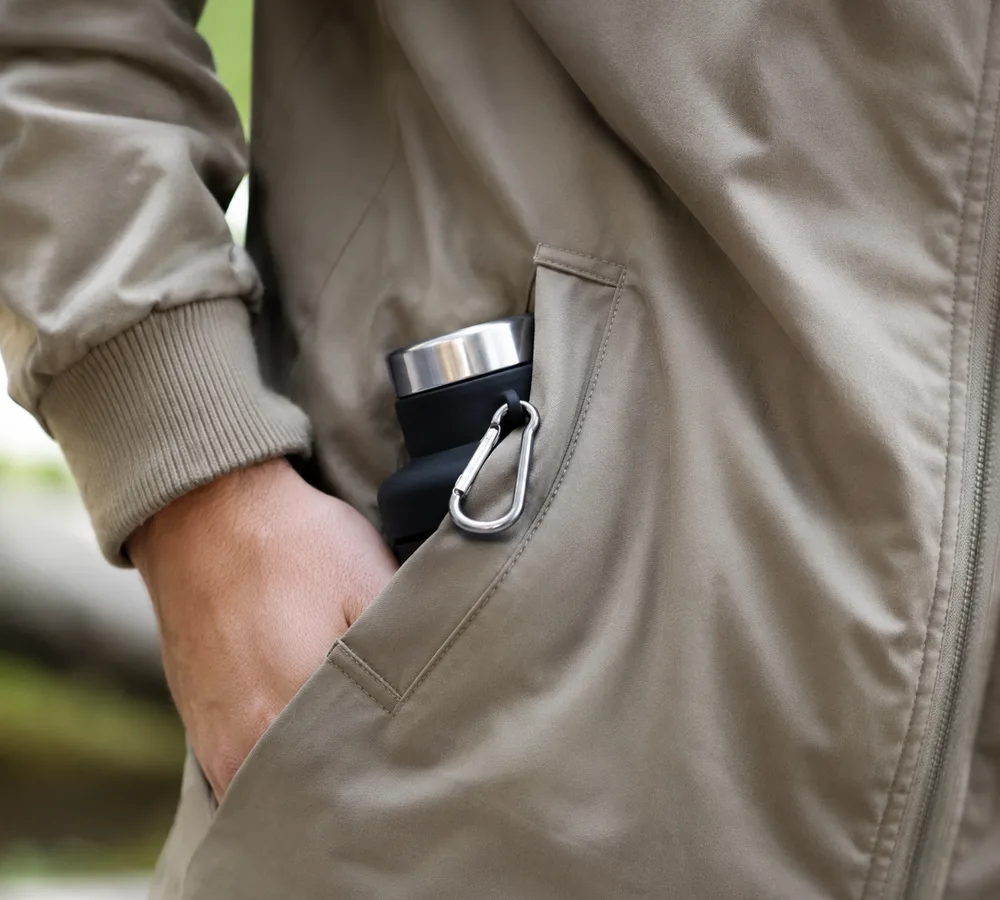
At the gate and on board: clip it or pocket it. The carabiner on the cap hangs the full bottle off a bag strap; once you drink it down during the flight, it folds back into the seat pocket. One reviewer on our reviews page summed up the traveling part:
"Nice bottle for traveling. The carabiner clips straight onto my backpack and I forget it's there."
Brandon K., verified buyer, 5 stars
Everything past the checkpoint — packing it flat, clipping it to a daypack, refilling across a city — is its own guide: how to travel and hike with a collapsible bottle walks through the whole trip.
Checked bags, medication, and the flight home
Three edge cases round out the rule. Checked luggage: TSA allows bottled water in checked bags with no size limit, so a full bottle in a suitcase breaks no rule. Physics has an opinion, though — a packed case squeezes a soft bottle for hours, and our guide to why collapsible bottles leak explains what pressure does to any cap. The move that avoids the question entirely: fly it empty and folded, fill it when you land.
Medication and infant needs: medically necessary liquids and food for infants and small children are exempt from the 3.4 oz limit and get screened separately. The exemption covers the liquid itself, so it changes nothing about how your water bottle travels.
Flying home from abroad: the 100 mL figure in TSA's rule is the same threshold used at checkpoint screenings in much of the world, which is why the empty-bottle routine works on both ends of an international trip. Rules are set by each country's authority, so the safe habit is universal: arrive at any checkpoint with the bottle empty, and no version of the rule has anything to stop.
That is the regulation, start to finish. A bottle that folds to less than a pocket's depth when the rule empties it is the one this rule was unintentionally written for — the Squishly collapsible water bottle holds 17 oz on the secure side and disappears everywhere else. What the silicone itself is and why it takes the folding is on the silicone water bottle page.
Frequently asked questions
Are collapsible water bottles TSA approved?
Yes, in the only sense that matters: TSA screens what is inside a bottle, not the bottle. An empty water bottle of any size and any material is allowed through the checkpoint in your carry-on, and TSA's own What Can I Bring tool lists empty water bottles as allowed in both carry-on and checked bags.
Why are water bottles not allowed on planes?
They are. What is not allowed through the security checkpoint is the water: any liquid container over 3.4 oz (100 mL) has to be empty when it goes through screening. Empty the bottle before the line, send it through with your bag, and refill it at a fountain on the secure side.
Can I bring a full water bottle in checked luggage?
Yes. TSA's What Can I Bring tool lists bottled water as allowed in checked bags with no size limit — the 3.4 oz rule only applies at the checkpoint. A word of caution from our side: cabin pressure and a packed suitcase squeeze whatever is in there, so cap it tight and bag it.
Do I have to collapse my bottle at airport security?
No. The rule asks for one thing only: that the bottle is empty. Collapsing it is for your benefit, not TSA's — folded down from 8.3 in to 4.5 in, it rides through the X-ray flat in a bag pocket instead of rattling around full-size the way a rigid empty bottle does.