· Riley Carter
How to Clean a Collapsible Water Bottle
A collapsible silicone bottle is easy to keep fresh, but the folds are the catch: residue collects in the creases where a quick swirl of water never reaches. The fix is simple once you know it — unfold the bottle completely before you wash, and always dry it open. Here is the full routine, from the daily rinse to clearing a stubborn smell.
Why the folds are the part that matters
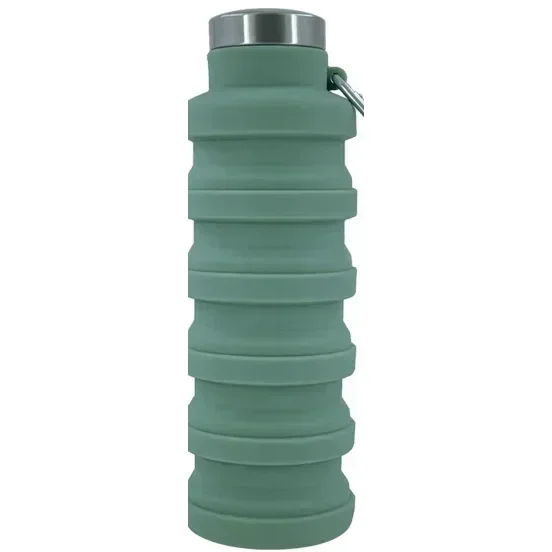
A rigid bottle has smooth inner walls, so water reaches everywhere when you rinse. A collapsible silicone bottle is different: when it is expanded, the accordion ribs form small ridges inside, and those ridges are exactly where water droplets, drink residue, and mineral film like to sit. If you only ever rinse the bottle while it is collapsed, or you dry it folded, that trapped moisture is what eventually turns into a musty smell. Good news: the same fold that creates the problem also solves it. Unfold the body completely and every crease opens up flat, so you can reach and dry all of it.
The daily rinse (30 seconds)
If you drink plain water, a quick daily rinse is usually all you need between deep cleans. As soon as you are done for the day:
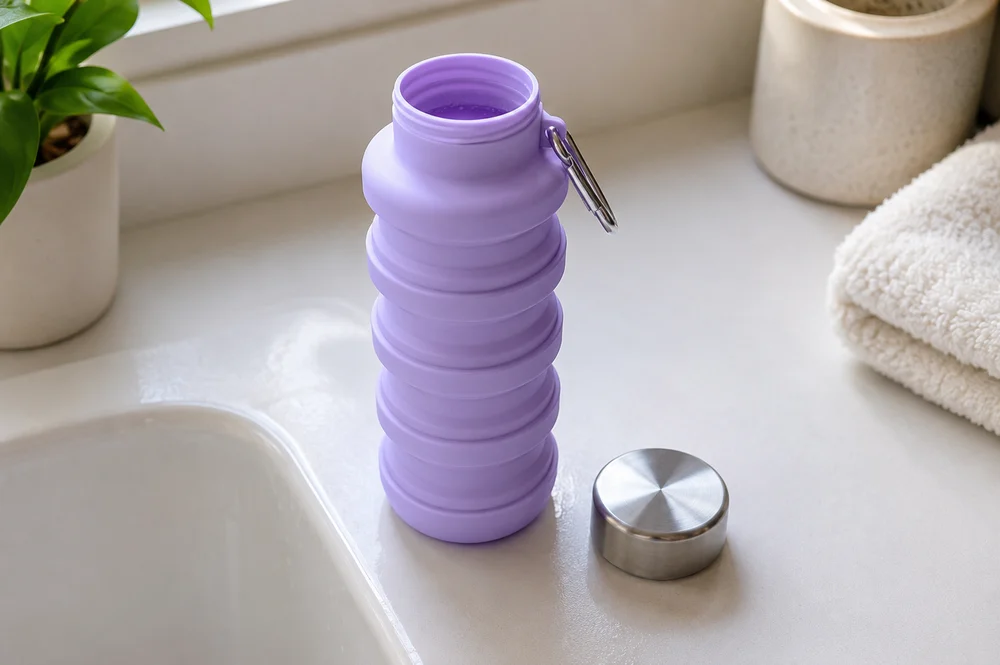
Unscrew the stainless steel cap and empty any water left inside. Expand the bottle to its full height so the ribs open up, then fill it about a third of the way with warm water, close the cap, and shake for a few seconds. Empty it, give the mouth and the cap threads a rinse, and — this is the important part — leave it standing open to dry rather than capping it wet. Thirty seconds, and you have prevented most of what causes odor in the first place.
If you have had anything other than water in it — juice, an electrolyte mix, coffee, a protein shake — skip the quick rinse and go straight to a proper wash. Sugars and proteins are what feed a smell, and they need soap, not just a swirl of water.
The deep clean (a few times a week)
A deep clean is where the folds get real attention. Do it every few days for a plain-water bottle, and after every use if you have had a flavored or sugary drink.
Unfold it completely. Expand the silicone body to its full height and keep it there. A fully open bottle has the widest mouth and the shallowest creases, which is what lets a brush reach the bottom and the sides. Do not try to clean it while it is collapsed.
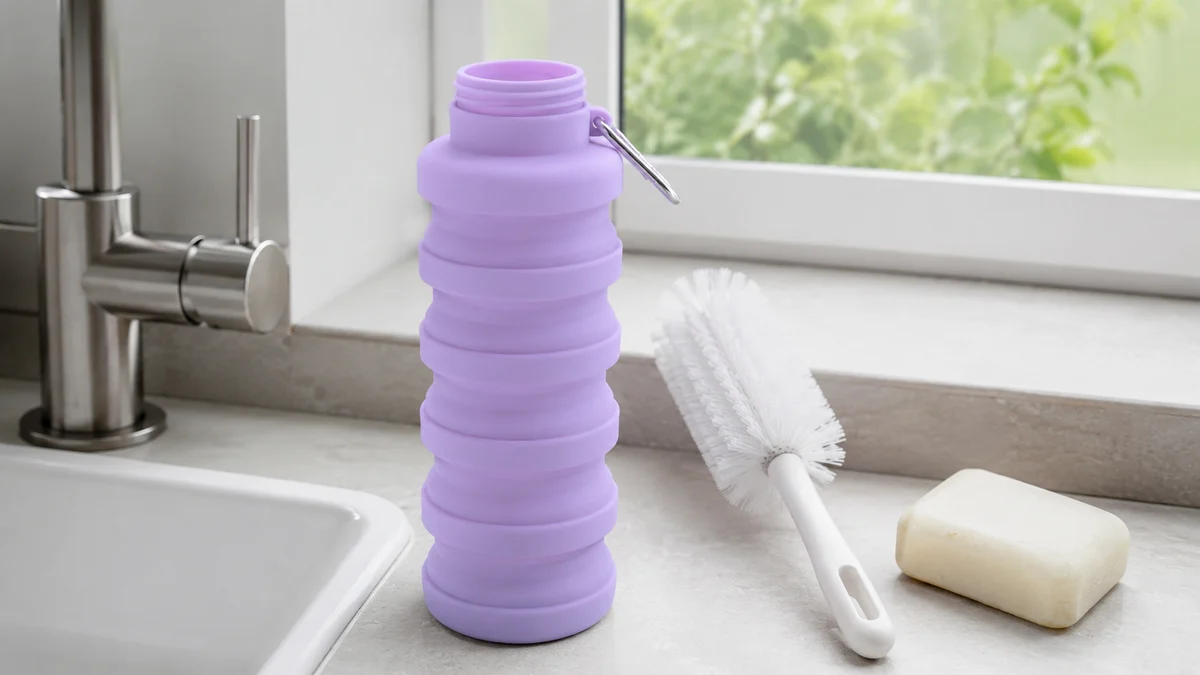
Wash with warm soapy water and a brush. Add a drop of dish soap and warm water, then use a bottle brush to scrub the inside walls, working the bristles along the inner ribs where residue gathers. Turn the bottle and run the brush around the base and up each side. The silicone is non-porous, so a normal wash lifts residue easily — you are scrubbing to reach the creases, not to fight a stain.
Do the cap and threads by hand. Unscrew the stainless steel cap and wash it separately. Give the threads on the bottle mouth a scrub too, since drink residue collects there and it is easy to miss. A small brush or an old toothbrush gets into the threads well. Residue left on the threads is also one of the reasons a bottle that used to seal starts to weep, which we cover in why collapsible bottles leak.
Rinse thoroughly and dry open. Rinse until there is no soap left, shake out the excess water, and stand the bottle open — upright with the cap off, or upside down on a drying rack — so air moves through it. Cap it only once it is completely dry inside.
Clearing odor and mildew
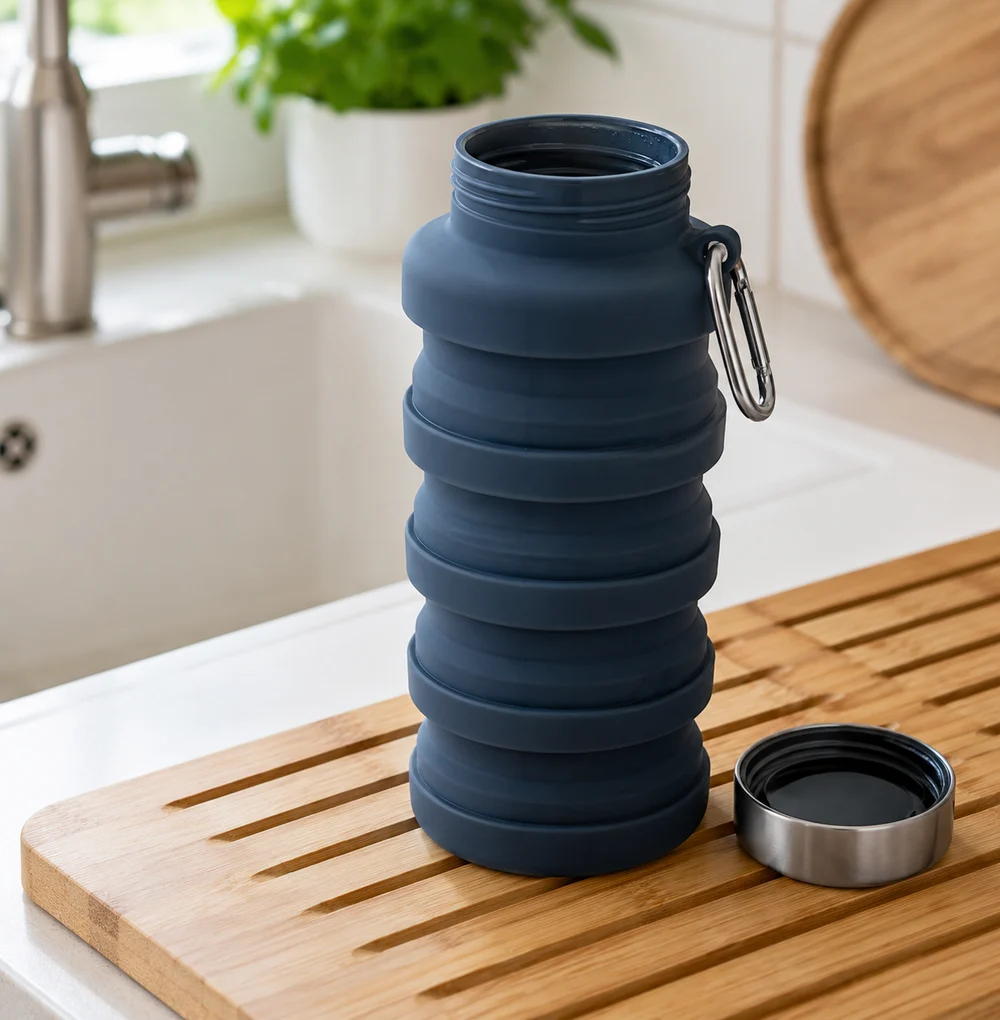
If a bottle has been capped damp for a while, or sat forgotten with a splash of something sweet inside, it can pick up a musty smell or show pink or black spots of mildew. Silicone does not absorb odor the way porous materials do, so in almost every case this lifts out with a soak. Two reliable options:
Baking soda. Add a spoonful of baking soda and fill the bottle with warm water. Cap it, shake, and let it sit for a few hours or overnight. Baking soda neutralizes odors rather than just masking them. Empty, scrub with a brush, and rinse well.
Water and white vinegar. Mix roughly equal parts white vinegar and warm water, fill the bottle, and leave it for 20 to 30 minutes (longer for a stronger smell). Vinegar cuts through film and helps with visible mildew. Pour it out, scrub the inside and the ribs with a brush, and rinse thoroughly until the vinegar smell is gone — it airs out quickly once you dry the bottle open.
For visible mildew spots, do the vinegar soak, then scrub the spots directly with a brush and a little baking soda paste. Rinse, wash once more with soap, and dry fully open. The combination of a soak, a scrub, and a proper open dry clears the vast majority of cases.
Drying: the step people skip
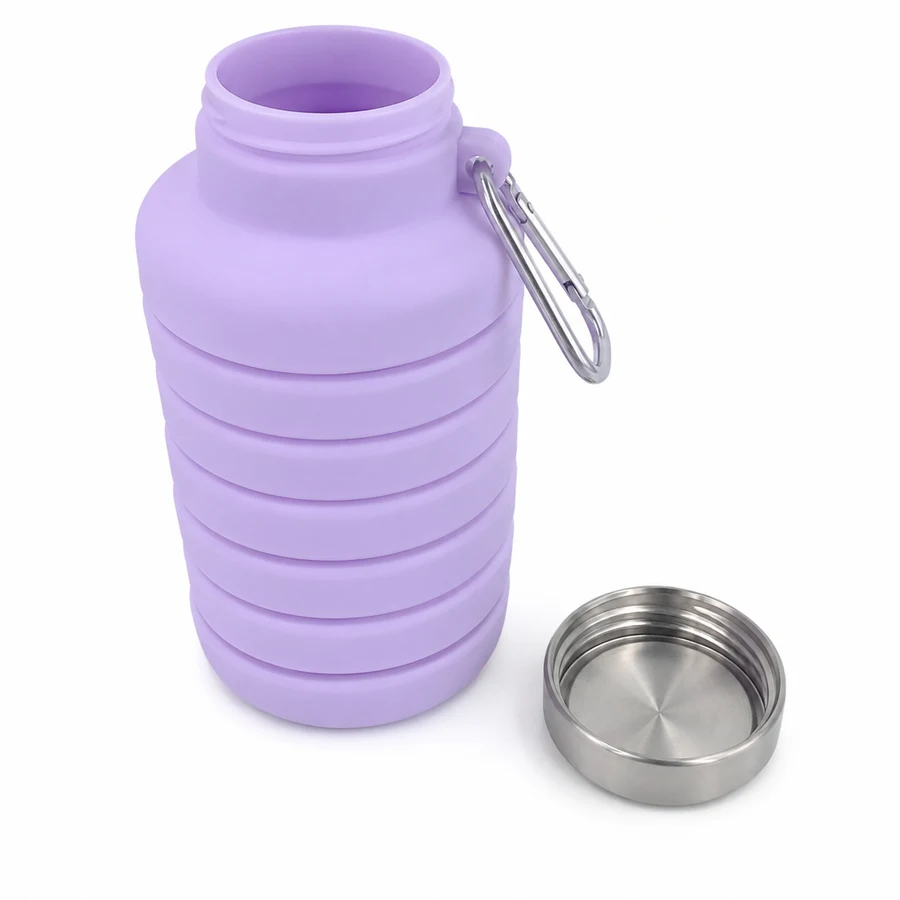
More collapsible bottles go musty from bad drying than from bad washing. A wet bottle sealed shut is a closed, warm, damp space — the one thing that lets a smell start. So make drying deliberate. Leave the bottle expanded, not collapsed, so air can circulate through the open ribs. Stand it upside down on a rack, or upright with the cap off, and let it dry fully before you fold it away for storage. If you are packing it to travel the next morning, dry it the night before rather than sealing it damp overnight.
What to avoid
| Avoid | Why | Do this instead |
|---|---|---|
| Capping it while wet | Traps moisture and starts odor | Dry fully open, then cap |
| Cleaning it collapsed | The brush cannot reach the folds | Unfold fully before washing |
| Bleach or harsh solvents | Unnecessary and hard to fully rinse | Soap, baking soda, or vinegar |
| Leaving flavored drinks sitting | Sugars and proteins feed a smell | Wash with soap right after use |
That is the whole routine: a 30-second rinse most days, a soapy deep clean that reaches the ribs a few times a week, a baking soda or vinegar soak if a smell ever creeps in, and an open dry every single time. Do that and a silicone bottle stays fresh and tasteless for years of folding and refilling.