
· Riley Carter
How Long Does a Collapsible Water Bottle Last (and What Wears First)
Nobody buys a bottle wondering how it will age. Then a year goes by, and the question becomes very concrete: is this thing still going to spring back?

What actually wears on a collapsible bottle
It helps to stop thinking of a collapsible bottle as a container and start thinking of it as a container with a hinge. A rigid bottle holds a shape, and the only thing that ages is the surface. Every time you press this one down, you ask the material to travel a real distance and come back.
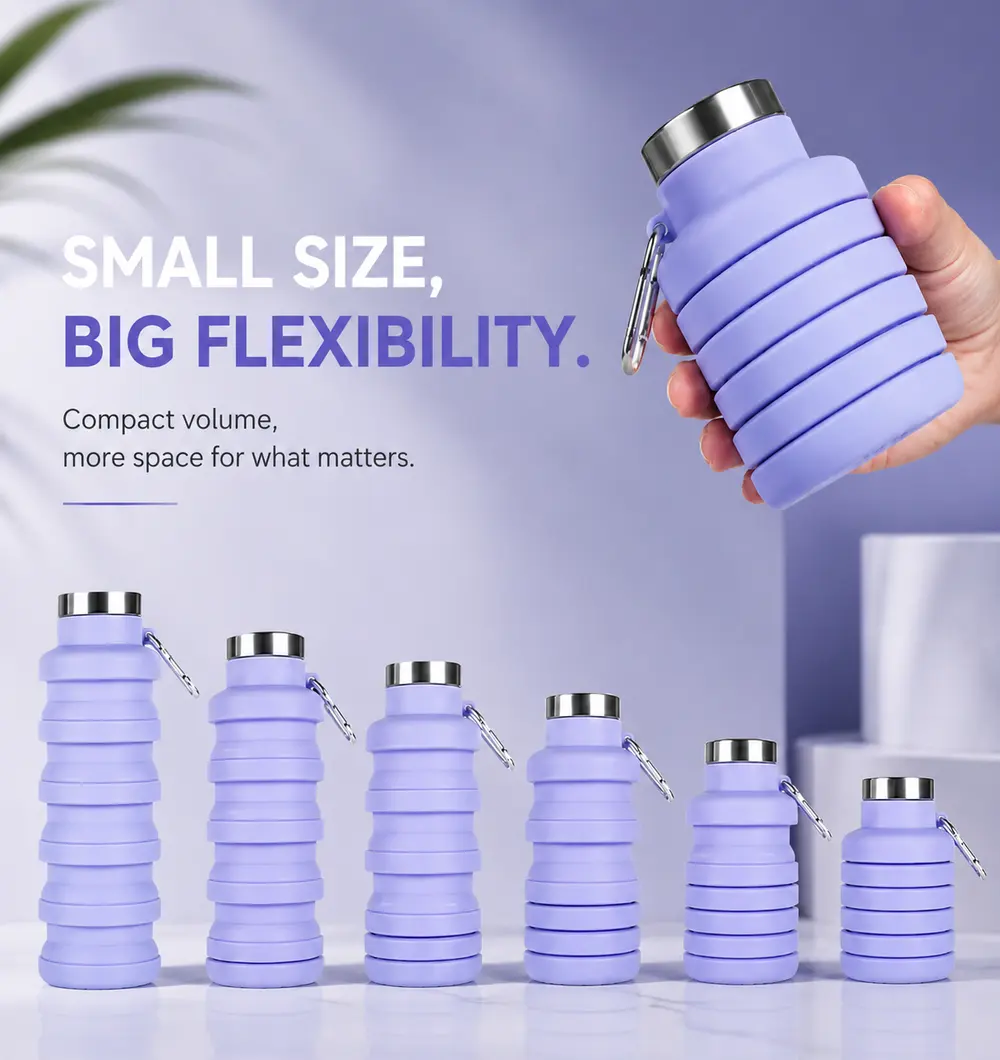
That distance is not small. The Squishly body stands 8.3 in tall and locks down to 4.5 in — a little over half its height, worth stating plainly because the category is full of claims that it folds to a third. It does not, and it does not need to.
the height it folds to — 4.5 in down from 8.3 in — which is the distance the silicone ribs travel every single time you collapse it
— Squishly product specs, 2026
Multiply that by a fold a day and you can see why the material outranks everything else on the spec sheet. Food-grade silicone is one continuous piece with no seams at the creases, and it bends and returns thousands of times without splitting. Thin plastic film folds smaller and costs less, but it creases into weak points. The full case for the material is on our silicone water bottle page.
The fold is a hinge, and hinges keep score
Here is the habit almost nobody thinks about, and the single most useful thing on this page. Most people collapse a bottle the same way every time: same hand, same grip, thumb on the same rib. Do that daily and one ring absorbs a disproportionate share of the work while the rings above and below barely move.
Silicone is forgiving about this, which is why it takes months rather than days to show. But it keeps score. The ring you always press first is the one that will hold a line first — not a split, not a leak, just a crease that stays visible at full height.
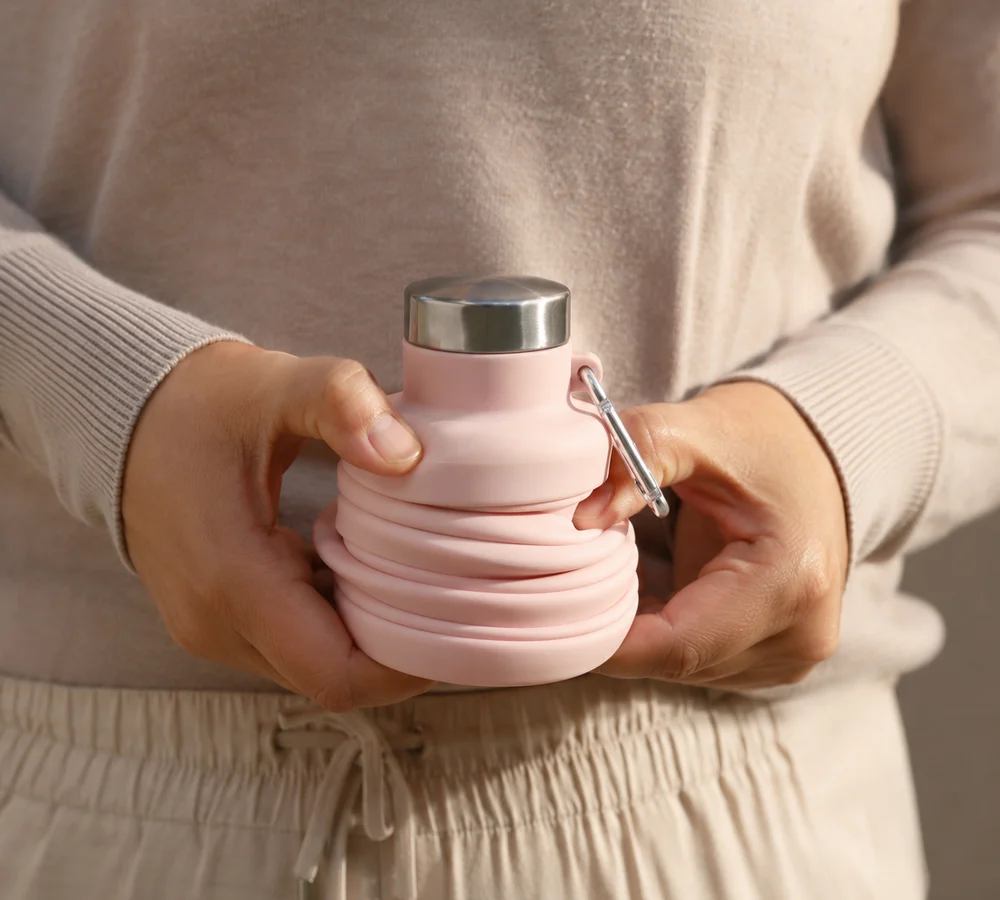
The fix costs nothing. Rotate the bottle a quarter turn in your hand before you press it down, so your thumb lands somewhere new. Some days start the fold from the top rings, some days press evenly from the cap with a flat palm. You are not being precious about it — you are refusing to teach the body one single crease.
Do the same on the way back up. Rather than yanking the cap to pop it open, hold the base and draw the body out to full height so every ring opens together. A body that gets fully expanded keeps its shape, and it is also the one you can reach inside to wash.
Three signs the body is aging
These are the three things we watch for on a bench, and the same three you would notice at home. None arrives overnight.
A rib that has taken a permanent line. Fill the bottle and stand it up. If one ring still shows a crease at full height under the weight of the water, that ring has been doing more than its share. It is cosmetic long before it is anything else, and it is the earliest signal you get.
A fold that will not stay down. A collapsed bottle should hold its short height on its own. If it creeps open in your bag, check the obvious cause first — trapped air or a swallow of water still inside — which is nearly always what it is, and has nothing to do with age.
A body that has gone soft when full. The clearest sign: a bottle that used to stand up on a desk and now slumps. One buyer put the healthy version well.
"Bigger than I expected, and it actually stands upright on its own on my desk. Perfect for long days at the office."
Ashley R., verified buyer, 5 stars
That upright stance depends on the ribs holding their designed shape, which is why the folding, not the calendar, is what wears a bottle.
Folded or open: how to store it between uses
This is where a small decision compounds. A bottle that lives permanently collapsed in a drawer spends months with the same rings pressed against each other. One stood up on a shelf between trips spends that time with no load on any ring at all. Neither is wrong, and you should absolutely fold it into your bag — that is what you bought it for. The habit worth having: if it has been sitting collapsed for a while, pull it out to full height before the next trip. Thirty seconds, and the ribs reset.
One thing that is not negotiable: fold it empty. Water does not compress, so pressing the ribs down on a capped bottle with liquid in it sends that water straight at the seal. That is a leak rather than a wear problem, and our guide to why collapsible bottles leak covers it properly.
The habits that age silicone fastest
Four things, and all four are habits rather than defects.
Sharing a pocket with your keys. The realistic hazard, far more than anything the bottle does on its own: a key ring loose in the same compartment presses against a soft body all day. Give it its own sleeve, or clip it outside with the carabiner — which is what the carabiner is for.
Collapsing it under a load for weeks. Folded in a bag is fine. Folded flat under a stack of books for a month is a crease waiting to set. Store it where nothing sits on it.
Scrubbing the ribs with an abrasive pad. The non-porous surface does not need force — soap and warm water lift everything off in one pass. Our cleaning guide for collapsible bottles has the routine that reaches inside the folds without attacking them.
Leaving it baking on a dashboard all summer. July is when this bottle gets used hardest, and a parked car is the harshest place it will spend an afternoon. Bringing it inside keeps the color looking new.
Notice what is not on that list: normal use. Filling, drinking, folding and refilling are the motions the body was built around — doing them daily is not what ages it.
Why the cap outlasts everything else
The cap is stainless steel, and it is the part least likely to give you trouble over the long run. Steel threads do not soften, do not go brittle, and do not crack if the bottle gets stepped on in a gym bag. That is why the material was chosen there instead of plastic.
What it asks for is cleanliness rather than care: a cap that sealed perfectly for a month and now weeps is asking for a wash, not telling you it has worn out. One buyer described the break-in honestly:
"Good bottle. The cap is a little stiff to screw on at first, but it loosens up after a few uses."
Dylan M., verified buyer, 4 stars
The steel settles in, the silicone stays flexible, and the two go on working together. If you are packing for a trip, the measurements that decide whether it fits your bag are in our guide to the best water bottle for travel.
What owners say after months of folding
The most useful signal on longevity is not a lab number, it is somebody buying a second one.
"Second one I've bought now. Just as good as the first, I really like it."
Chelsea M., verified buyer, 5 stars
"Sturdy, solid bottle. It feels like it's going to last."
Victor O., verified buyer, 5 stars
average across 31 verified buyers, several of them on a repeat order
— Verified Squishly reviews, 2026
Every rating, four stars alongside five, is on the reviews page.
Getting years out of it: the short version
Keep one thing from this page: the quarter turn. The rest follows from it.
| Habit | Why it matters |
|---|---|
| Rotate before you press it down | No single rib takes every fold |
| Empty it before folding | Water has nowhere to go but the cap seal |
| Draw it out to full height regularly | Rings reset, and you can reach inside to wash |
| Give it its own pocket, or clip it outside | Keys and pens are the real hazard in a bag |
| Do not store it creased under a load | A held crease is the one that sets |
And if a bottle ever fails rather than wears — a nicked rim, a body that will not hold its shape out of the box — send a photo and your order number to contact. The terms are on our refund policy, and replacements ship free in the US in 6 to 10 business days. The bottle, its 17 oz capacity and the four colors are on the collapsible water bottle page.
Frequently asked questions
How long does a collapsible water bottle last?
Years rather than seasons, if the body is food-grade silicone rather than thin film. Silicone flexes thousands of times without splitting, so habits set the clock: fold it empty, vary where you start the press, and store it without a crease locked in.
Do collapsible water bottles crack where they fold?
A quality silicone body does not crack at the ribs — it is one continuous piece designed to bend there. What can happen is a rib taking a permanent crease because it is always folded first. Rotating the bottle before you press it down spreads that work around.
Should I store a collapsible water bottle folded or open?
Folded is fine for a bag, where the space it saves is the point. At home, standing it open is kinder: nothing holds a crease. If it lives collapsed in a drawer, expand it fully every few days.
Why won't my collapsible bottle stay folded down?
Almost always because air or water is still inside, and a sealed body has nowhere to send it. Empty it, press it down with the cap off so the air escapes, then screw the cap on once it is short.